Declutter your fantasy self to let go of more things

In this post I want to share my recent experience with decluttering my fantasy self in hopes that you also will declutter your fantasy self to let go of more things…

Lately I have felt disappointed about the amount of stuff I’ve been selling and donating. I had accumulated a lot over these past months and I needed to look at why?

Over a year ago we moved from Sydney to Tasmania with very little. Our previous home wasn’t very big and I had kept it very minimal for a family of 4. Prior to moving I let go of even more. We all did.

What changed?

Not long after our arrival in Tasmania I caught a vision for homesteading and self-sufficiency. (Not the first time). Something about being in a Country cottage in a small town with new found homesteading friends had ignited a past desire for this lifestyle. Suddenly I needed sewing supplies and fabric to make our own skirts and dresses. Canning equipment to preserve all of our leftover harvest. Chickens and all that go with them! Craft paper for homemade cards, candle making kit and more! Oh and pretty vintage items to decorate the home. Much of this was found at thrift stores or marketplace. (Not the chickens)!

Just typing this out makes me sigh…

Much of what I was trying to do was stressing me out and the stuff around me was sending unwanted messages such as ‘you need to finish me!’

You see, I’m a homeschooling Mother of an 11yr old and have a 3yr old. This is not the right season for me to be learning new skills and seeking to be self-sufficient on my own. In my free time I want to do things such as read and write. Make some simple home-made recipes that support my low-waste life-style. Spend time outside in nature with my family. Sit and mend some worn-out items. Pursue living with less.

A minimalist can still have hobbies & interests

It’s not that being a minimalist, or even an extreme minimalist means that we cannot have hobbies or items that go with them. That is not the problem. The problem is when what we are pursuing is not really who we are. Not what our true desire is. We have an image in our mind of what we think we ‘ought to be’. It may be a good image or desire but for whatever reason it is not right for us. At least not at this time. We need to declutter our fantasy self.

The problem is when what we are pursuing is not really who we are.

My experience with trying to do all of these new things and learning new skills and buying more stuff was that it was making me very stressed and unhappy. It was also taking away from the important things I needed to be focusing on. As I mentioned, the stuff was sending me unwanted messages which left me feeling disappointed and overwhelmed. I wondered how others were able to do these things but I wasn’t? Was I not capable? I felt guilty that I wasn’t living up to my homemaker ‘image’

Slowly I began to see that I was being totally unreasonable with myself and that in reality I did not need to do these things. It wasn’t the real me. It was my fantasy self!

Letting go of some of these items felt like I was giving up on a dream, a possibility. Like somehow I had failed because I should have persevered and tried to make the time to do these things. But when I slowed down and thought about my priorities, I realised that these things were not. I also really missed my organised minimalist home. Something I truly value.

So how do we know who the true self is opposed to the fantasy self?

This is really what we need to figure out so that we can let go of the burden of the fantasy self. I mentioned about thinking about my priorities. This was key for me. We cannot do it all and we shouldn’t try to. We can ask ourselves a few things to find out who we are and what we want.

-What are your 5-7 top priorities in life right now?

-Which hobbies, interests or activities do you really enjoy? (Not feel obligated to do).

-Is the image or idea you are imagining realistic in this season of life?

-Going back to priorities, is this activity or object important enough to keep in your life? Is it what I value most?

I want to share my current list in the hope that it will help you with yours.

My top values and priorities right now in no particular order:

-Raising my children well (focusing on homeschool, time & attention).

-Having a clean, tidy and orderly home

-Spending time reading the bible & prayer time

-Eating healthy

-Spending some time writing

These are the main things at the moment.

Declutter your fantasy self

If I hold on to my fantasy self I will not have time for who I really am and what is important to me right now. My fantasy self is growing all of our food and has transformed our entire backyard to feed our family. The real me does not want to have a full-time job growing and tending to a huge garden. I wouldn’t be able to do anything else and I wouldn’t even enjoy it. So instead I am going to keep growing a few herbs, veggies and flowers in my contained veggie patches that I can easily maintain and enjoy.

My fantasy self has a beautifully decorated farmhouse filled with home-made or vintage treasures. The real me does not like visual clutter or want to dust around the decor items or spend time changing things around. Whenever I buy things for the home I immediately regret it. I can still have a beautiful minimalist home that is easy to maintain and has a few special items hand-made by my daughters.

Finding freedom

As I release the items attached to my fantasy self, I feel relief. A burden has been lifted to be someone I’m not. I feel free again to pursue the things I truly enjoy and value. My home is again free from most of the clutter. My almost extreme minimalist goals are within reach which helps me to have clarity again. Clutter affects our mind and emotions and clutter can be anything that you don’t truly need or want.

If you declutter your fantasy self you will be free to embrace the real you!

I have let go of my fantasy self and it feels wonderfully freeing to just be me.

minimalist megan.x

Pursuing extreme minimalism

For awhile now, I have been exploring and contemplating pursuing extreme minimalism. What does it look like compared to my current minimalist lifestyle and is it worth pursuing?

To my surprise I have found that in many areas of my life I am already what some would consider quite ‘extreme’. Yet if you looked around our home you may find it to be simple and perhaps a typical minimalist aesthetic with a lot of white, some bare walls and clear surfaces. The difference is probably within my personal items vs our family spaces. We are a family of 4 and so there are toys, books, paperwork, homeschooling supplies and my husband’s tech and gadgets. In regards to my own belongings I am quite minimal and realising more and more that I really don’t need a lot to be content. Hence my interest in pursuing extreme minimalism.

Naturally minimalist

I may not have written much about my minimalist journey from earlier in my life but I have always lived very frugally and lightly. Looking back to my life prior to getting married, I had my own room at home and it never occurred to me that it was minimalist or that my lifestyle was minimalist, simple or frugal. I guess it was not a popular lifestyle back then! My room was a cream colour, with no pictures on the walls. A frameless bed, a set of drawers with nothing much on top of it and nothing much inside as I had a built in closet as this home. Clothes were few and I barely thought about buying stuff. My only weakness would have been books since there was a Christian bookstore next to my work at the time. Prior to that I went to the library.

Fast forward to marriage and our first daughter, I had an intense longing for living with less and I still do today. There is no reason that one needs to accumulate more than necessary if that is their desire and it does not affect those around them. Of course there will be an ebb and flow as we pass through different seasons of life and that’s okay. The more I look at extreme minimalism or as some might call it ‘essentialism’, I am realising how freeing it is. While minimalism offers many benefits, to me, extreme minimalism offers even more.

Rather than just decluttering and getting rid of the excess, I am able to consider and re-define what is actually necessary for me to be content. That most likely won’t make sense to others but again, that’s okay.

Some questions I ask as I work on pairing down:

-If I moved would I want to take this with me?

-Do I use this item on a daily/weekly basis?

-Would I buy this again?

-Could I live without this?

-Do I want to look after this item, ie; manage it?

-What is the message this item is telling me? (From Fumio Sasaki of ‘Goodbye things’.

-Is one enough?

Also I keep this verse in mind when I am reducing items.

For we brought nothing into this world, a]and it is certain we can carry nothing out. And having food and clothing, with these we shall be content. 1. Timothy 6:7-8

Let’s take a look at each question:

If I moved would I take this item with me?

If I am questioning whether I would be willing to pack an item and take it with me on a move, then chances are I don’t really need the item now. It’s unlikely to be a necessity or hold much value hence I would be hesitant to take it with me so it may be something to let go of. Early last year we moved interstate after 10 years in the same home. It really helped me to go that bit further in my minimalist journey only keeping which I really needed or cherished.

Do I use this item on a daily/weekly basis?

Depending on the category or room, I like to set boundaries on deciding what stays and goes. I.e, In the kitchen an item needs to be used at a weekly minimum. I don’t keep occasional kitchen items as it’s just not worth the space. I can always borrow a one-off type item if I need it. Toiletries or skincare must be used daily except for more seasonal things like sunscreen. Setting a limit by how often an item is used means that most of my items are used regularly so there is no clutter or stagnant stuff hanging around.

Would I buy this again?

Sometimes we are given or acquire an item that we only kind of like or use. Asking ourselves whether we would be willing to buy an item again helps us to realise how important an item is or not. That usually helps ease any anxiety with letting it go.

Could I live without this?

One of my favourite decluttering questions! Since I am seeking to live with only the things I truly want or need, then asking if I could live without this really helps define if it’s a want, a need or just clutter. Also an item may be a want but if I could happily or comfortably go without an item then why not just let it go. It’s amazing how little we need to be content.

Do I want to look after this item, ie; manage it?

Another good question to ask. Seeking a more simple and meaningful life means we need to let go of the things that are taking us away from that. Managing and taking care of items we rarely use is such a waste of our precious time and maybe money. There is an idea about viewing our stuff within our home as inventory. The less inventory you have to manage, the easier life will be. This begs the question,

Do you own your stuff, or does your stuff own you?

What is the message this item is telling me? (From Fumio Sasaki of ‘Goodbye things’.

According to Fumio Sasaki of ‘Goodbye things’, our stuff is sending us messages. As I looked around my own home I really understood what he was saying. Un-read books said, “you need to read me”. Clothing-“you need to fix me, you haven’t worn me”. Craft and unfinished projects cried, “Im still waiting to be finished!” And on and on!

What if the items in our home were more kind to us? Or we only kept what supported our life and served us right where we are? Maybe right now isn’t the season to be trying new hobbies or learning new skills. Those books sitting on our shelf waiting to be read probably weren’t read because there was something about them we just didn’t like?

We tend to feel guilty for not tending to the many items we intended on completing or caring for. The reality is that we are not meant to be thinking about and dealing with so many material objects. We need to let a lot of it go.

Is one enough?

Marketing tells us if one is good, more is better. Is that really true? For most items, have one good quality piece is well and truly enough. Choosing quality over quantity can be a wonderful benefit of being minimalist. I find it truly satisfying to use an item to it’s full capacity and then replace it. This usually takes years. I’m still working on this but it is my goal to have only one of most things.

Finally as I reflect upon the above verse from 1 Timothy 6:7-8, I have these thoughts,

For we brought nothing into this world, a]and it is certain we can carry nothing out. And having food and clothing, with these we shall be content. 1. Timothy 6:7-8

Holding onto useless possessions only hinders our life journey and possibly eternity. This verse seems quite extreme, ‘having food and clothing, with these we shall be content. I view material items as tools to be used in this life, remembering that we cannot take them with us at the end. What tools we need will differ from person to person and within the various seasons we are in. I continue to find that I need very little personal belongings to be content and perhaps a bit more to care for my family.

Pursuing extreme minimalism is truly freeing. To let go of the excess, the surplus, the non-essentials. To find the balance of enough.

I hope this post inspires you and gives you the courage to let go of more and enjoy living with less.

Give your stuff a new life, bless someone in the process

Motivation to let go

Sometimes it’s difficult to find motivation to let go of the items that we know we don’t need or use any more. We may pull an item out from a drawer or closet and think, ‘maybe one day I’l need this’. Or this was a really special gift I received from so and so. Perhaps you can see the beauty in something although you don’t exactly know what to do with it or where to display it. I’ve been there! In fact I go through this on a regular basis. Even after being minimalist for around 8 years, I still question certain things and then put them back. Only to revisit the item again asking the same questions!

A new season

Different seasons in life mean that we sometimes accumulate things that are necessary for only a certain period of time. Having a baby, a new hobby, a business, (fill in the blank).  The problem comes when we don’t recognise that that season is over and we no longer need to hang on to those related items, unless of course you know that you will re-use them again soon, ie: passing down kids clothing to the next child or re-using maternity wear etc. Most of the time though, we WON’T need those items. The season has passed and it’s time to move on to the next season. If we fail to recognise this and store away those ‘extras’ or ‘maybe items’, we can end up feeling burdened. For out of site, is not always out of mind! In fact every time you happen to come across those un-used items, (think, un-finished projects, unwanted ornaments or unworn clothing with tags still on). Guilty:( . You don’t feel good. It is that nagging reminder that you haven’t completed what you started or that you haven’t used that item as you intended. You know it’s a waste and yet somehow you feel stuck.

Renew your thinking

Although I am not 100% with the Kon mari method, I do see the value in recognising that our items may not be doing us good any more. It has become that weight that you don’t need to carry around any longer, both physically and metaphorically speaking.

There are a number of methods that can be used to let go of our stuff and for items that we are no longer using I suggest these verses:

Let each of you look out not only for his own interests, but also for the interests of others. Philippians 2:4

Sell that ye have, and give alms; provide yourselves bags which wax not old, a treasure in the heavens that faileth not, where no thief approacheth, neither moth corrupteth.

For where your treasure is, there will your heart be also.  Luke 12:33-34

So the people asked him, saying, “What shall we do then?”He answered and said to them, “He who has two tunics, let him give to him who has none; and he who has food, let him do likewise.” Luke 3:10-11

Do not withhold good from a]those to whom it is due,
When it is in the power of your hand to do so. Proverbs 3:27

He who has pity on the poor lends to the Lord,
And He will pay back what he has given. Proverbs 19:17

distributing to the needs of the saints, givena] to hospitality. Romans 12:13

Give your stuff a new life, bless someone in the process

These verses are GREAT motivators for me when I find myself hanging on to things that are not getting used. Letting them go means that I can give them a new life, a fresh start. However the best part of this is that I get to bless someone else!

These things can bring another joy and smiles or even make their life more livable. While I am storing an item away, someone else could be using it on a regular basis. We have no idea how much difference releasing our stuff and giving to others can make.  But we know that Jesus asks up to be generous and give our extra things to others. We don’t need to hold on to items ‘just in case’. We can trust God to supply for our needs in the future.

Trust God

“Therefore do not worry, saying, ‘What shall we eat?’ or ‘What shall we drink?’ or ‘What shall we wear?’ For after all these things the Gentiles seek. For your heavenly Father knows that you need all these things. Mathew 6:31-32

Generosity

So as we go come into contact with those un-used items, yet again! We can ask ourselves if it would be better to give this item a new life and bless someone else in the process. Imagine the item/s being used regularly and making a real difference in someone’s life. Instead of thanking the item for it’s service (or lack of), we can thank the Lord for His provisions and generosity toward us, asking that He now bless someone else with the items that we are about to share.

And remember the words of the Lord Jesus, that He said, “It is more blessed to give than to receive.” Acts 20:35

A key to help you on your simplifying journey

When I began my journey of intentional minimalism, I had one thought it mind. “Get rid of junk before moving!” 

I was expecting our first baby and sorting through the home, trying to get rid of as much as I could before moving to our new home. We weren’t hoarders by any means but the excess stuff we had accumulated between my husband and myself was just too much to deal with. As anyone who has moved house knows, you always have more stuff than you realised.

I have always been a minimalist at heart and preferred to live more lightly. I just didn’t know that there was a name for it! As I prepared for the move, I began to read books on decluttering and look for sites that could help. That’s when I came across the term ‘minimalism.’ It was exciting to me! Finally others understood my overwhelm and need to live with less. As I donated, recycled and trashed items, I felt a sense of relief. I was determined to make our move easier and continue to live simply afterward. That was my goal and purpose. 

Do you have a clear purpose in mind?

As you can see, my purpose for decluttering was to get ready for our move and also be less stressed when our new baby arrived. Yet as my journey continued, my purpose and vision for simplifying changed. But that’s okay. The point is that I always had a reason for decluttering and simplifying my life. Without one, I would have given up at some point and not been able to experience the clear benefits of minimalist lifestyle.

Whenever I help someone at the beginning of their minimalist or decluttering journey, I ask them to write some things down beforehand. To make some sort of plan. Without a plan, it is too easy to give up along the way because you aren’t sure of why you are even doing this hard work and what the end result will be. Having a clear goal of vision lets you know when you have met your own sweet spot with decluttering. Not that minimalism has a clear end because I believe it is fluid. Your wants and needs will change with the seasons of life and so will your decluttering needs. But you will know what feels right for you. Just enough.

Here are some questions to ask and ways you can make a plan or define your purpose for decluttering.

  1. What is my vision for my home and life? (You may want to save pictures that reflect your desired outcome.) Is it clean, clutter-free, stress-free, inviting?

2. You may come up with a slogan or mantra that describes the feeling or goal for your home. E.g: One year mine was ‘a calm and orderly home’. Now it is ‘to live more lightly in my heart and home’. One of my readers has the word ‘serene.’

3. What are the benefits you expect to happen after you have cleared your home? Make a list. E.g. I will have less housework to do. More time to spend with the kids. Less stress in the family with less stuff to manage.

4. Reward yourself when you have reached certain goals. I.e, when the kid’s rooms are decluttered I will take them out for ice-cream. Or once the bathroom is decluttered I will treat myself to a relaxing aromatherapy bath. This will help you stay motivated and train yourself that decluttering is a good thing!

5. Stay flexible. As there are new seasons in life, I try to stay flexible with the changes and allow my purposes to adapt. Right now we are in lockdown and the house is kind of full with different work and projects going on. My home isn’t very orderly and that’s okay for now. 

My purpose keeps me grounded when things change. When I remember what my purpose for living simply is, then I can get back on track without the feeling of overwhelm that I used to have. 

I hope you have found this post useful and look forward to hearing your purpose for decluttering. Until next time!

Minimalism and sentimental items

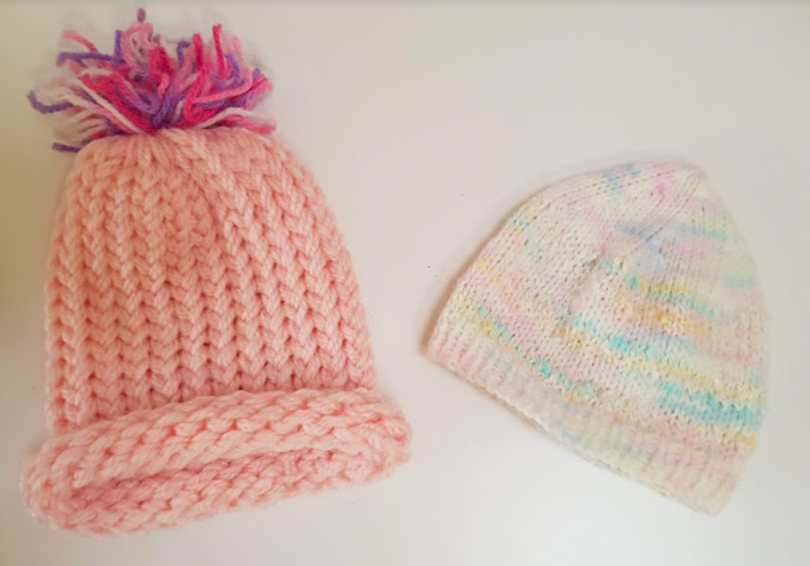
To most people these are just knitted baby hats. To me, they are meaningful. Something I wish to hold on to.

As I am building a keepsake box for our recent baby girl, it got me thinking about minimalism and sentimental items. How do we decide what to keep and what to let go of? I hope to give you some things to consider as you deal with this usually difficult area of sentimental items.

Firstly I want to share with you this quote I recently came across:

“When everything is precious, nothing is precious.”

Interesting thought! When we tend to pile everything together, no single item gets to shine so to speak. If I had kept every single newborn item from both of my girls, then would these little hats that meant so much to me have a chance to be seen? Appreciated? Cherished?

What makes an item Sentimental?

I have a handful of sentimental baby items that I have kept for both of our daughters. Each item was carefully selected as a keepsake. Each item has a personal story behind them which gives them their significance. I wish I could tell you of some special formula or checklist I apply when choosing sentimental items but it isn’t so simple. Sentimental items are different. It isn’t just about function or beauty, (although it may include them). These are items you hold close to your heart.

As I held the baby hat in my hands, a feeling came over me that I can’t quite put into words. It wasn’t a feeling of joy or nostalgia, but a deep sense of significance. Much deeper than logic alone. It represented many things to me. How tiny my baby girl was in the hospital. How sweet she looked in it. How it was the first item she possessed when she came into this world. And much more. More than I can even express.

And that’s the thing about sentimental items. No-one else can tell you what’s valuable, only you can decide that. It doesn’t need to make sense to anyone else.

As you are going through your belongings trying to decide what is truly meaningful, I suggest a few things.

  • Start off with the items that you know are important to you and you want to keep.
  • Spend some quiet time and hold each item. What feelings do you have?
  • If you like the item but it doesn’t hold much meaning, perhaps think of someone who would appreciate it more such as a family member if it is a family heirloom.
  • If you are unsure about letting go of something, would taking a picture of it help? Then you can revisit the photo any time you want to.
  • If an item makes you feel sad or unhappy there is no reason to store it away, it’s okay to let it go.
  • Sometimes you can repurpose or refurbish items to make them more useful or relevant to you now. Re-frame an old picture or restore an antique piece of furniture you inherited. That way you can enjoy the item and the memory now.

I truly believe that when you hold each item you will just know which ones have special worth to you. Sometimes it takes more than just looking at items.

minimalism and sentimental items

As a minimalist I try not to store items away but bring them into my daily life to be used. This also goes for sentimental items. If they are truly meaningful to me then I want to give them honor by displaying them or make them available to be looked at. My older daughter likes to look through her baby book and read the letters and stories in there. She can look through her keepsake box any time.

Things may change

Remember that over time the way you feel about your sentimental items may change. Just because they are sentimental, does not mean you need to keep them forever. You may find that when you re-visit an item it no longer holds meaning or memories. Maybe you no longer need the physical item because the memory lives inside of you. And that’s the beauty of minimalism.

For more inspiration:

https://thesimplehome.blog/?p=175